
· by Michael Blair, Nashville's Cleaning Service
Somewhere in October the first properly cold night arrives, the thermostat gets flipped to heat, and the house fills with a faint burning smell. Usually that is dust that collected on the furnace during the months it sat unused, burning off the first time it runs, as Trane explains in its note on a heater that smells like it’s burning. If dust is all it is, the smell should fade within about ten minutes of running. What the furnace can’t burn off is the dust already sitting on registers, fan blades and the tops of cabinets, and a couple of hours spent on it before the switch beats chasing it all winter.
Registers and returns
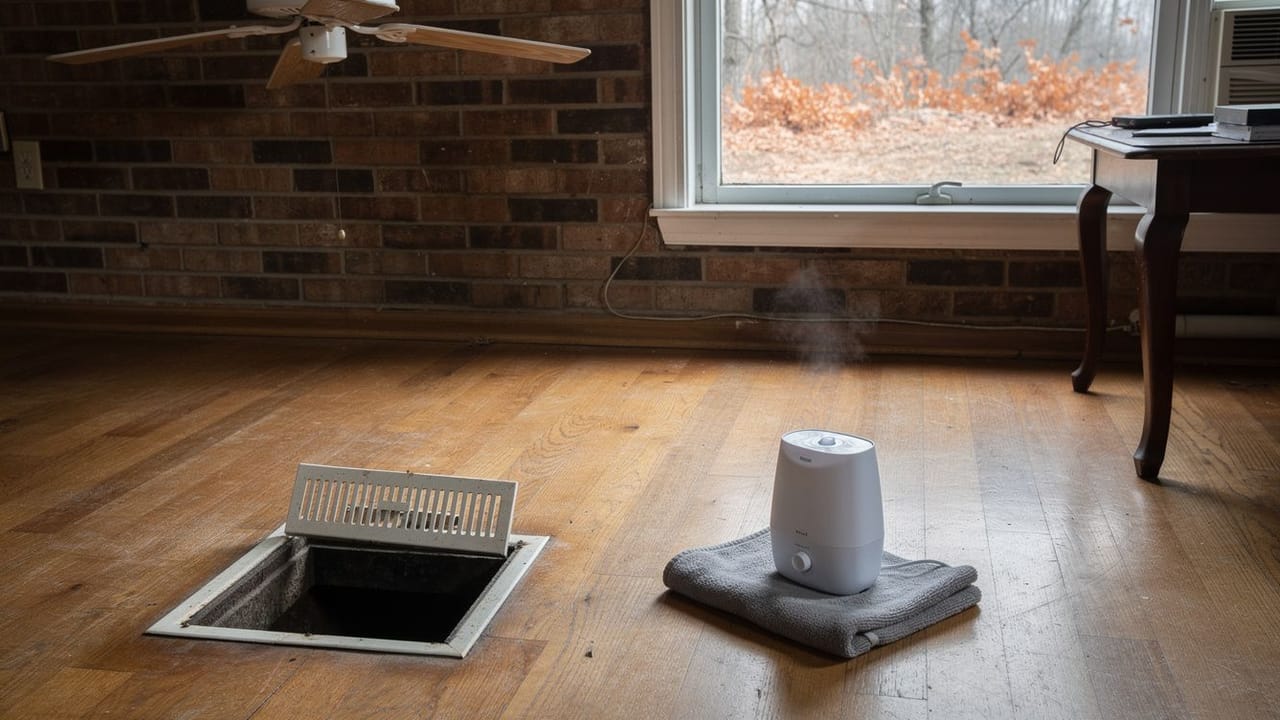
Floor registers collect everything: crumbs, pet hair, a stray Lego, grit tracked in from the yard. Lift them out, vacuum down into the opening as far as the hose reaches, and wash the grilles in the sink with dish soap. Wall and ceiling registers need a brush attachment and a damp cloth run along the louvers. This is surface cleaning, not duct cleaning, and the EPA’s page on air duct cleaning treats it that way: registers can simply be vacuumed, or taken off and cleaned. Vents and switch plates are on the checklist for every deep clean we do.
Return grilles, the large ones that pull air back to the system, gather the most. The same EPA page calls a dusty return normal, since the air being drawn through the grate carries dust with it. Vacuum the grille, wipe it, and look at the filter behind it while it is open. ENERGY STAR’s heating and cooling maintenance checklist says to check filters once a month and clean or change them, and warns that a dirty one can raise energy costs and damage the equipment badly enough that it fails early.
Should ceiling fans be cleaned before switching them for winter?
Yes: plenty of people reverse their ceiling fans for winter, and the blades should be cleaned before they do. ENERGY STAR’s ceiling fan advice is to run them clockwise on low, which makes a gentle updraft that sends the warm air collected near the ceiling back down into the room. Clean the blades first. The top of each blade carries a summer’s worth of dust, and switching the direction and turning the fan on throws it across the bed and the floor. We slip an old pillowcase over each blade and draw it back, so the dust ends up inside the case.
The other surfaces nobody looks at get the same treatment: the tops of kitchen cabinets, door frames, crown molding, the upper slats of blinds and the top of the refrigerator. We work top to bottom so the floors come last, and we use a damp microfiber cloth rather than a feather duster, which mostly moves dust to a lower shelf.
Dry air, static and screens
Heated winter air tends to run dry. The EPA’s guide to the use and care of home humidifiers lists static electricity, peeling wallpaper and cracks in paint and furniture among the nuisances winter heating brings. Screens are where we take the most care. We wipe them with a dry microfiber cloth, or one barely dampened with plain water, and never spray glass cleaner straight onto a panel.
Humidifiers bring their own mess. Ultrasonic and impeller models, the cool-mist kind, can throw the minerals in tap water into the air, and the same EPA guide says a “white dust” on nearby surfaces is the sign. Nashville’s water has some to give: Metro Water Services’ 2025 water quality report put average calcium hardness at 75.3 mg/L, ranging from 63.9 to 92.6. EPA’s answer is distilled water, which still holds some minerals but likely fewer than most tap water; demineralization cartridges are another option, though EPA notes they vary widely in how well they work. For a portable unit, EPA says to empty the tank, wipe it dry and refill it every day, and to clean the whole humidifier every third day to keep scale and microorganisms from building up. The same minerals are behind the scale on shower glass and taps.
When should you clean before heating season?
Clean before the first cold snap if the forecast gives you the chance, then give the house a quick second pass two or three weeks into heating season. After that, keeping up is about frequency rather than effort. If the house looks dusty between cleanings come December, our post on weekly, biweekly or monthly cleaning walks through choosing a schedule, and you can ask us for a free estimate on a fall deep clean or a winter schedule.
Space heaters and baseboard heaters need the same attention as the registers. We switch them off, unplug them or turn them off at the breaker, let them cool, and only then vacuum along the fins and the intake. In a house with dogs or cats, check the intake for pet hair before the first use.
- Filter checked before the first heating run, then once a month
- Floor registers lifted, vacuumed and washed; returns wiped
- Fan blades cleaned before the direction is switched
- High surfaces first, floors last
- Humidifier tank emptied and refilled daily, cleaned every third day
- Space heater and baseboard fins vacuumed while off and cool
Sources
- Trane, Why Your Heater Smells Like It’s Burning (2023) — Dust on a dormant furnace burns off at first use; run about 10 minutes; electrical smell or a smell lasting over an hour means turn it off and call an HVAC professional
- U.S. EPA, Should You Have the Air Ducts in Your Home Cleaned? — Registers can be vacuumed or removed and cleaned; dusty returns are normal; not routine maintenance; when to consider it; dirty ducts not shown to raise dust levels
- ENERGY STAR, Maintenance Checklist (heating and cooling) — Inspect, clean or change air filters once a month; a dirty filter raises energy costs and can damage equipment
- ENERGY STAR, Ceiling Fans — In winter run the fan clockwise at low speed; the updraft sends warm air near the ceiling down
- U.S. EPA, Use and Care of Home Humidifiers — Winter heating brings static; ultrasonic and impeller units disperse tap-water minerals as white dust; distilled water and cartridges; empty and refill daily, clean every third day
- Metro Nashville Water Services, 2025 Water Quality Report — Calcium hardness averaged 75.3 mg/L in 2025, range 63.9 to 92.6
FAQ
Cleaning Before the Heat Comes On for Winter — questions
Why does my house smell like burning dust when the heat comes on?
Dust collects on the furnace while it sits unused through the warm months and burns off the first time the system runs. If dust is the cause, the smell usually fades within about ten minutes. A burning electrical smell, or any burning smell that lasts more than an hour, is a reason to switch the system off and call a licensed heating technician.
Does turning on the heat make a house dustier?
The evidence for that is thin. The EPA says studies have not conclusively shown that dirty ducts push household dust levels up. What winter heating does bring, by the EPA’s account, is dry air and static. A clean filter, clean registers and a top-to-bottom dusting before heating season are still worth doing before the first cold night.
Do I need my air ducts cleaned every fall?
No. The EPA does not recommend cleaning ducts routinely and does not count it as a necessary part of yearly heating and cooling maintenance. Cleaning the registers, returns and filter covers what a house cleaner can reach. Duct cleaning is a separate service worth considering when there is substantial visible mold inside hard ducts, insects or rodents in them, or enough dust and debris to clog them, such as heavy renovation dust, and that is a question for an HVAC contractor.
Can you clean your air vents yourself?
Yes, the registers and return grilles are surface cleaning, and the EPA says registers can simply be vacuumed or taken off and cleaned. Lift the floor registers out, vacuum down into the opening and wash the grilles with dish soap; brush and wipe the louvers on wall and ceiling vents. Cleaning inside the ducts is a separate job.