· by Michael Blair, Nashville's Cleaning Service
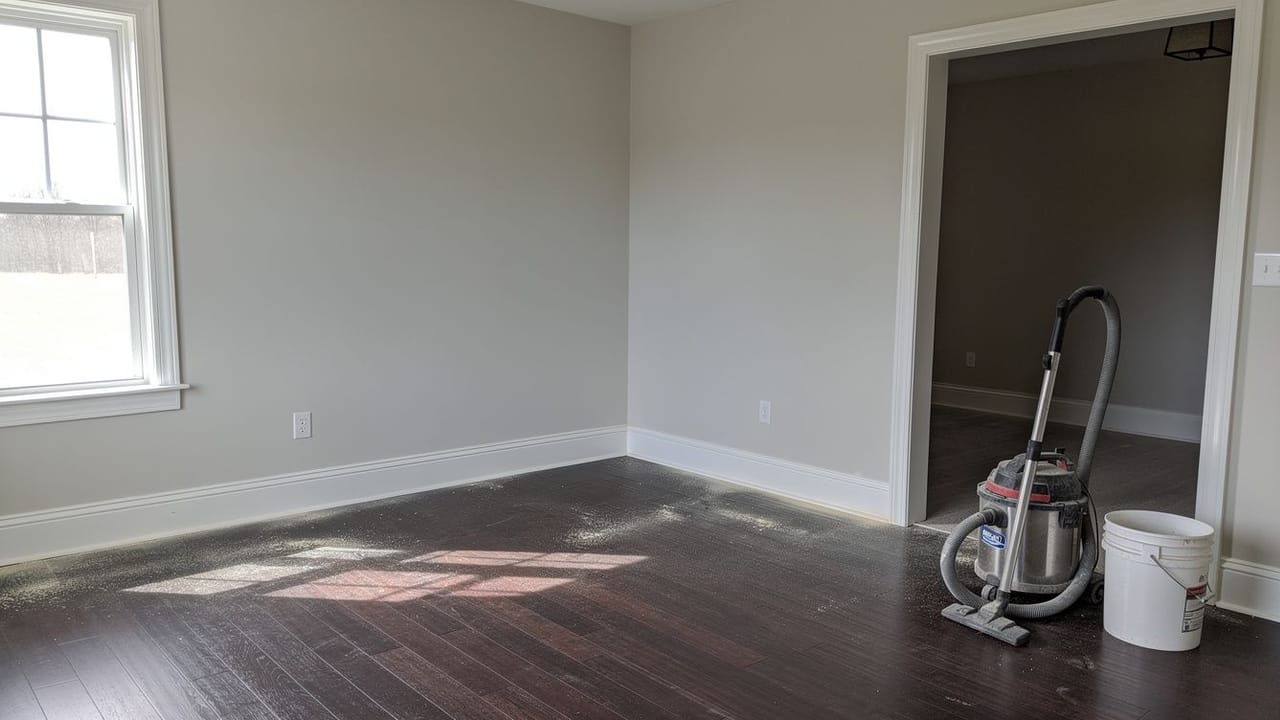
A remodel ends twice. The first time is when the contractor hauls out the last scrap of drywall and the room looks done. The second is a few mornings later, when the new countertop, the windowsills and the carpet in the next room are under a fine gray film nobody saw land. Sanding joint compound, cutting tile and tearing out old plaster all make dust that is fine enough to float, and a quick vacuum and dust usually stirs as much as it removes. Here is how we get it out, in what order, and why the method we lean on was written for something more serious than drywall.
Why does renovation dust keep coming back after you clean?
It keeps coming back because the finest dust was still in the air when you cleaned, and it settles over the following days onto surfaces you already wiped. A duster lifts some of it back up, a vacuum without a fine filter can do the same, and a damp rag on a heavy layer smears it into a paste that dries as a haze. None of that means the cleaning was careless. It means the job is a sequence, not a single visit.
That is how our post-construction cleaning is set up: a rough clean to clear debris and the bulk of the dust, a detailed clean of every surface, and a final pass a day or two later to catch what came down overnight. A remodel also leaves dust in places a routine visit never touches, like the tops of door frames, inside drawers near the work and the tracks of windows, which is ground our deep clean already covers.
A method written for lead dust, sound for any dust
The cleaning order we follow comes from the federal rules for lead-safe renovation, and we want to be plain about that. The EPA’s Renovation, Repair and Painting Program covers paid work that disturbs paint in homes built before 1978, and EPA says roughly three-quarters of U.S. homes built before 1978 still contain some lead-based paint, so that kind of project can easily create dangerous lead dust. Tennessee is not on EPA’s list of states that run their own program, so the federal rules apply here directly. Those rules are written for the renovation firm doing the work. They do not make a house cleaner responsible for lead clearance, and following them does not make a home lead-safe.
What they do contain is the most careful published method for getting fine dust off walls, floors and furniture: the cleaning steps in the federal RRP work practice standards and EPA’s plain-language version for homeowners, Lead Safe Renovations for DIYers. A method built to catch lead dust catches drywall dust too, so we use it on every remodel cleanup, whatever the age of the house.
If your home was built before 1978 and the work disturbed old paint, the cleanup is only part of the answer. EPA recommends hiring lead-safe certified contractors for that work and notes you can hire a certified dust sampling technician, inspector or risk assessor to test for lead dust afterward. The program generally does not cover homeowners working on their own house, but it does apply to landlords and to house flippers. That is the case in many older homes in Nashville’s close-in neighborhoods, and we will ask the house’s age when you call.
What order should you clean in after a remodel?
Clean from the top down and from dry to wet: walls first, then a HEPA vacuum over everything, then damp wiping, then the floors mopped last. The federal standard has walls cleaned starting at the ceiling and working down to the floor, either with a HEPA vacuum or a damp cloth, so nothing you knock loose lands on a surface you already finished. Every remaining surface and object, furniture and fixtures included, gets a thorough HEPA vacuuming next, and the rule adds that the vacuum must have a beater bar when it is used on carpets and rugs.
That carpet line is the answer to most post-renovation carpet cleaning. Fine dust works down into the pile where suction alone at the surface does not reach it, and the beater bar is what lifts it up to the filter. We go over carpet in the rooms next to the work as well, since dust travels along the floor and through doorways even when the work area was taped off.
Damp wiping comes after the vacuum, on every surface except carpet and upholstery. Hard floors are mopped with the wash water kept apart from the rinse water, the two-bucket method the rule names, so the mop is not putting dust back down. EPA’s homeowner page adds the practical end point: wipe with wet disposable cloths until the cloths come up clean.
- Walls, ceiling down to floor, HEPA vacuum or a damp cloth
- Every surface and object HEPA vacuumed, furniture and fixtures included
- Carpets and rugs vacuumed with a beater bar
- Hard surfaces wiped damp until the cloth stays clean
- Hard floors mopped with separate wash and rinse water
- A final pass a day or two later for what settled overnight
How do you know the dust is really gone?
You check a surface with a wet cloth instead of trusting your eyes. The federal standard uses a windowsill: wipe it with a wet disposable cloth and compare the cloth to a cleaning verification card, and if the cloth is darker, clean that area again and wipe again. A homeowner does not need the card to borrow the idea. A clean white wet wipe run along a sill or the top of a door frame shows dust long after a room looks finished, and we use that test on our final pass.
Then think about the air. EPA’s guidance on improving indoor air quality puts source control and ventilation first and advises ventilating during short-term activities that put pollutants in the air, such as painting. On a mild fall or spring day in Middle Tennessee, open windows while the dust is still settling. When the work is done, put a new filter in the furnace or air handler before the system runs for weeks, because it will pull fine dust from every room. Our post on cleaning before the heat comes on covers the registers and returns, and anyone in the house with allergies may find cleaning for allergy season useful too.
Duct cleaning is not an automatic next step. EPA’s page on whether to have air ducts cleaned says it is probably unnecessary without large visible deposits of dust or mold, a musty odor, or unexplained symptoms, and that dusty return registers are normal and easy to vacuum or remove and wash. If you see heavy buildup inside a duct after the remodel, have it looked at. Otherwise the registers and a new filter are usually enough.
If you are finishing a kitchen, a bath addition or a new build in Smyrna or anywhere else around Nashville, ask us for a free estimate. Tell us what work was done, which rooms it touched, whether the floors are carpet or hard surface, and roughly when the house was built.
Sources
- US EPA, Renovation, Repair and Painting Program — The RRP rule covers paid work disturbing paint in pre-1978 homes; about three-quarters of pre-1978 homes still contain some lead-based paint; generally not homeowners on their own home, but landlords and flippers; Tennessee is not among the states running their own program.
- 40 CFR 745.85, Work practice standards (Cornell Legal Information Institute) — Walls cleaned ceiling to floor by HEPA vacuum or damp cloth; all surfaces HEPA vacuumed, with a beater bar on carpets and rugs; damp wiping of hard surfaces; wash and rinse water kept separate when mopping; windowsill cleaning verification against a card.
- US EPA, Lead Safe Renovations for DIYers — Homeowner cleaning steps and supplies; wipe with wet disposable cloths until they come up clean; certified contractors recommended for pre-1978 work; certified dust sampling technicians can test afterward.
- US EPA, Improving Indoor Air Quality — Source control and ventilation come first; ventilate during short-term activities that generate pollutants, such as painting.
- US EPA, Should You Have the Air Ducts in Your Home Cleaned? — Duct cleaning is probably unnecessary without large visible deposits of dust or mold, a musty odor or unexplained symptoms; dusty return registers are normal and easy to vacuum or wash.
FAQ
Cleaning Up Renovation Dust After a Remodel — questions
Can you vacuum drywall dust with a regular vacuum?
You can pick up the visible layer, but the lead-safe cleaning method EPA publishes calls for a HEPA vacuum, with a beater bar on carpets and rugs. We use HEPA machines on every renovation cleanup and follow the vacuuming with damp wiping, which takes up the fine film a vacuum leaves behind on hard surfaces.
How do you clean drywall dust off walls?
Start at the ceiling and work down to the floor, either with a HEPA vacuum and a brush attachment or with a damp cloth, the order EPA’s lead-safe rules set for walls. Wring the cloth out well, rinse it often and change the water when it clouds, so you are not spreading a thin paste across new paint.
How do you clean drywall dust off floors?
Vacuum first with a HEPA vacuum, using the beater bar on carpets and rugs, then mop hard floors with two buckets so the rinse water stays apart from the wash water. Mopping before vacuuming turns fine dust into a film. Plan to do the floors again after a day or two, once the air has dropped what it was holding.
Should I clean my air ducts after a renovation?
Not automatically. EPA says duct cleaning is probably unnecessary unless there are large visible deposits of dust or mold, a musty smell, or unexplained symptoms in the household. Vacuum or wash the return registers, which collect dust normally, change the furnace filter once the work is finished, and have the ducts inspected only if you see heavy buildup.
How long does dust last after a remodel?
It depends on the size of the job and how much the air in the house moves, so there is no fixed number of days. Fine dust keeps settling after the work stops, which is why our post-construction cleans end with a final pass a day or two after the detailed clean, and why one wipe-down rarely finishes it.