
· by Michael Blair, Nashville's Cleaning Service
A tile floor that looks dirty is usually a grout problem. The tile itself is dense: porcelain, by the Tile Council of North America’s definition, has water absorption of 0.5 percent or less. The cement grout between the tiles is the porous part, and it holds onto whatever lands on it. Ordinary mopping moves dirty water across the floor and leaves it in the grout lines to dry, and over time the lines turn a shade darker than they were. Getting them back is a specific job, and the wrong cleaner can end with the grout cut out and replaced. Grout lines are on the list for every deep clean we quote, and this is how we go about them.
Why does grout turn gray?
Cement grout is a sponge on a small scale. The Tile Council of North America’s FAQ on cleaning grout describes it as porous, with a large surface area under the microscope for a stain to soak into. Spills, soap and the dirt carried in mop water all find their way in, and each mopping adds a little more than it takes away. Because the grout joint usually sits lower than the tile and is more porous, the council’s note on residue on grout says that is where the dirt shows. A sealer slows all this down, though the same cleaning FAQ says a topical sealer wears off under foot traffic, and a floor that was never sealed has nothing slowing it.
The other common cause is the cleaner itself. According to the council’s cleaning FAQ, even a good alkaline cleaner leaves a sticky soap film if it isn’t rinsed off, and that film attracts dirt. Its residue note adds that detergent left behind is often close to invisible and builds up over time as it combines with soil. A floor that looks worse the more it gets cleaned is usually telling you about residue.
What cleaners damage grout?
Grout is mostly cement and sand, and cement dissolves in acid. The TCNA cleaning FAQ puts it plainly: grout reacts with vinegar the way baking soda does. Some installers do take a stubborn stain off with straight vinegar or a stronger acid, dissolving the top layer of the grout, but the same page says grout manufacturers don’t recommend it and that regrouting is sometimes the result. The vinegar and citric acid we use on glass and chrome, described in our post on Nashville hard water stains, stay off the grout for that reason.
Oil and wax soaps are the other mistake; the council names oil- and wax-based cleaners as ones to keep off grout, since they leave a waxy or oily film in the joint. We don’t use bleach as a routine floor cleaner, and mildew in shower grout is a separate job that our post on mold and mildew in a Nashville bathroom covers. Scrub pads deserve a test spot too: the TCNA FAQ on grout says a nylon pad won’t hurt normal floor tile, but some decorative tiles are softer and should be tried somewhere out of sight first.
For ceramic and porcelain tile with cement grout, the council recommends an alkaline cleaner over an acid one, and that is what we use. Natural stone, whether marble, travertine, slate or limestone, gets only the cleaner its supplier or installer specifies, tried in a corner first. Epoxy grout is a different animal. LATICRETE’s maintenance guide for its SpectraLOCK PRO epoxy grout puts its absorption under 0.5 percent and says routine cleaning takes only detergent and a sponge or mop, though it admits the grout is not self-cleaning.
- Ceramic or porcelain with cement grout: alkaline cleaner
- Natural stone: the cleaner its supplier specifies, tested first
- On cement grout: no vinegar or other acid, no oil or wax soap
- Rinse with clean water after any cleaner
How do you deep clean grout lines?
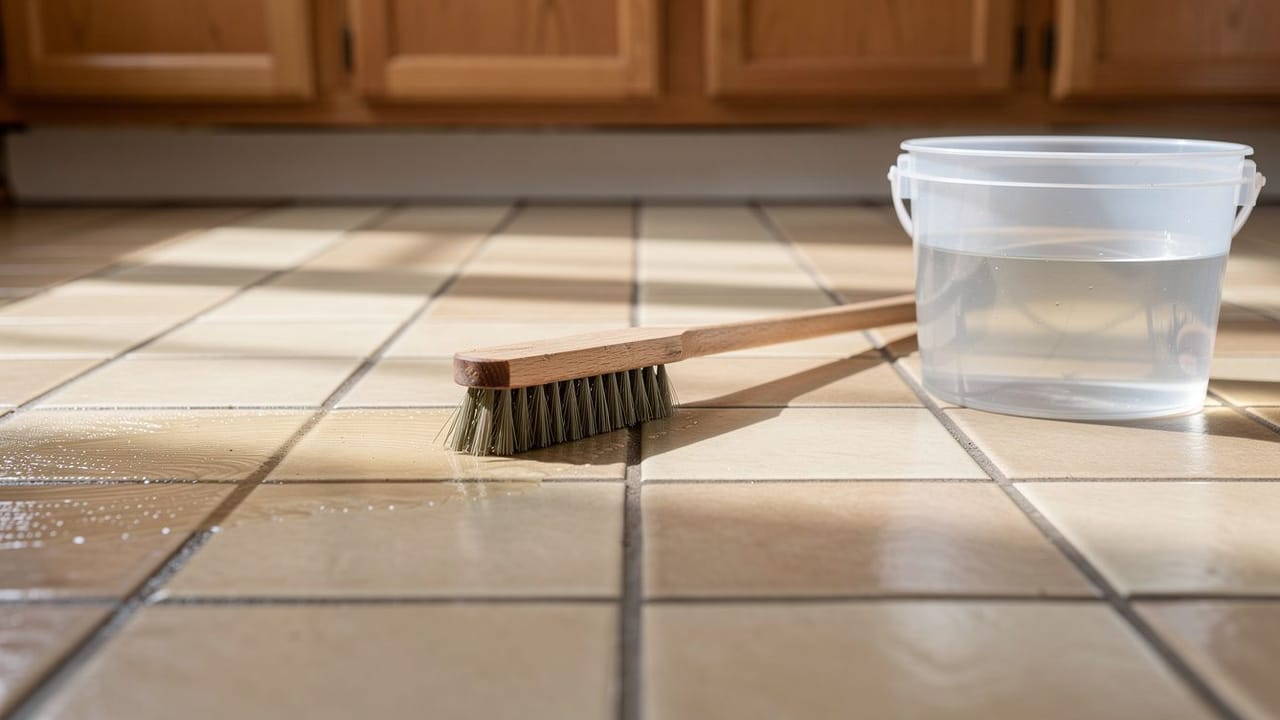
Vacuum or sweep first; we would rather lift the loose dirt dry than turn it into mud in the grout lines. Apply the alkaline cleaner diluted as the label says, because LATICRETE’s floor-care regimen warns that a stronger mix only makes the floor harder to rinse, and give it a few minutes to work. Scrub the grout lines with a nylon brush or pad, never wire, which the same guide cautions may scratch some tile. We work along the line rather than across the tile. Then comes the step that gets skipped. The TCNA cleaning FAQ calls the best method applying the cleaner, vacuuming the dirty water up with a shop vac, then putting down rinse water and vacuuming that up as well, which lifts off what is left of the soap film.
Steam is what we try on a stain that survives all of that. According to the council’s FAQ, some stains that don’t respond to conventional cleaners will come clean under pressurized steam. We don’t steam grout that is already cracked or loose, and we don’t steam natural stone unless its supplier says it is safe to.
Keeping it clean afterward
Once the grout is clean and fully dry, seal it. The TCNA cleaning FAQ calls sealer a very good idea for cement grout and describes two kinds: penetrating sealers, which bond with the grout and repel water and water-based stains, and topical sealers, which coat the joint, give it a plastic look and wear away under foot traffic. Its residue note adds that a topical acrylic sealer that isn’t vapor permeable can turn white as it reacts with moisture. We use a penetrating sealer and go by its label for when to reapply. The glazed tile itself gets nothing, since the council says the glaze will be easier to clean and longer lasting than any coating.
Then change the routine. Sweep or vacuum before mopping, and use less cleaner than you think: the council’s residue note says a tile floor can very often be cleaned with hot water or an extremely small amount of cleaner. Change the water when it looks dirty rather than when the floor is done, because, as LATICRETE’s guide puts it, dirty mop water only applies more dirt to the floor. In bathrooms, dry the grout lines with a towel. Clean tile tends to stay clean, too; according to the cleaning FAQ, ceramic tile without a sticky film on it does not tend to hold the electrostatic charge that draws some kinds of dirt. If your grout is past what a mop can fix, tell us about the floor and we’ll quote the job.
Sources
- Tile Council of North America, FAQ: Cleaning Grout — Cement grout porous; acids dissolve cement and grout reacts with vinegar; acid on stains not recommended by grout makers, can mean regrouting; alkaline cleaner preferred; avoid oil or wax cleaners; unrinsed film attracts dirt; vacuum up dirty water then rinse and vacuum; steam for stubborn stains; penetrating vs topical sealers; do not coat glazed tile; clean tile holds no electrostatic charge
- Tile Council of North America, FAQ: White Residue — Detergent residue forms a sticky film with soil; dirt shows in the lower, more porous grout joint; hot water or very little cleaner; vacuum dirty water or rinse; non-vapor-permeable acrylic sealers can turn white
- Tile Council of North America, FAQ: Porcelain vs Non-Porcelain — Porcelain tile defined by water absorption of 0.5% or less
- Tile Council of North America, FAQ: Grout — Alkaline cleaner and nylon scrub pad; some decorative tiles are softer, test first
- LATICRETE, TDS 400 PRO SpectraLOCK PRO Grout Installation & Maintenance Guide (2009) — Epoxy grout absorption under 0.5%, routine care with detergent, not self-cleaning; wire brush may scratch tile; stronger detergent harder to rinse; dirty mop water applies more dirt
FAQ
Cleaning Tile Floors Without Wrecking the Grout — questions
Is vinegar safe for cleaning grout?
Not as a routine cleaner. Grout is mostly cement, which acid dissolves, and the Tile Council of North America says grout reacts with vinegar the way baking soda does. Some installers use straight vinegar on a stubborn stain, but grout manufacturers don’t recommend it and regrouting is sometimes the result. Use an alkaline cleaner on ceramic and porcelain, and ask the stone’s supplier what to use on stone.
Why does my tile floor look dirty right after mopping?
Residue. Cleaner that isn’t fully rinsed off leaves a sticky film that holds dirt, and dirty mop water settles into the grout lines as it dries. Use very little cleaner, pick up the dirty water, rinse with clean water and change the water often.
Should grout be sealed after cleaning?
Yes for cement grout, once it is clean and fully dry. A penetrating sealer bonds with the grout and repels water and water-based stains, so dirt stays on the surface where a mop can reach it. How often to reapply depends on the product, so follow the sealer’s label. Epoxy grout and glazed tile do not need it.
Can you clean grout with steam?
Yes, for stains that survive an alkaline cleaner and a nylon brush. The Tile Council of North America says some stains that resist conventional cleaners will come clean under pressurized steam. We keep steam off grout that is already cracked or loose, and off natural stone unless its supplier says steam is safe for it.